Sunday, 28 May 2023

WHY SHOULD EVERYONE READ CHILDREN’S BOOK?


“Why should everyone read children’s book?” was the topic of discussion in the blog chatter’s Writ fest 2023 conducted on 26th May 2023 in FB at 7.00 pm.  This session was concluded around 7.45 pm. 12 people sent their likes, 34 people sent their comments including myself, and 12K people have watched this session.  Shalini R has moderated the programme by collecting and combining the questions of the viewers or participants.  Sonia Mehta and Sohini Mitra were invited speakers.

The following were the points on discussion:

1. Both the authors have written lot of books for children, started    newspapers exclusively for kids and conceptualized quizzes for T.V.  They shared their insights on what gets children’s attention, be it books or any other content meant for them.

2. Among the fiction or non-fiction books, curriculum based stories make popularity of the fiction variety was also the part of the discussion.

3. Their books cover an enormous amount of information and activities for kids to do.  These were the result of the research process carried out by them is the point to be noted.

4. The speakers were also working to minimize the textual errors in the children books that occur during the publication.

5. They also discussed about how can children’s book be made visually appealing, the designs which typically fit for a book, its  Cover ,  illustrations, font size, design and layout  properly done with the assistance of a designing team.  Finally according to the age of the children, books need to be prepared.

6.  Why Toys & learning tool equipment are very important?  Sonia Mehta insisted that stories and games etc are the major learning tools for the children which help them to do their activities in the right manner. She gave the example of Harry Potter.  Learning outcomes are more attained by these learning tools is the key point to be noted.

7.  Both the authors have seen book-trends over the years.  They expressed their opinions on how much do children drive the book-buying decision and how can the parents and teachers give them more agency to choose from?

Answering the above question, Solini Mitra emphasized that the cost or the price of the book is the matter.  Children are not aware of the cost of the books.  Parents should have such culture of visiting the bookshops, book-fairs along with their children.  They should read with their children together.  Choice of taking books from the library like comics, fictions etc. are more beneficial factors.

Authors, publishers should collaborate with schools to make the book-clubs.  Choice of books stimulates the children’s decision making which will change the present scenario of reading books.


Sonia suggested that the schools have to play a major role and help children take different books from their own school library.   With this they can definitely discuss and know with other that who has taken what sort of book.

Shalini asked both writers/authors that “which books are you reading?”  Sonia Mehta answered that she was always reading the books written by Jane Austen and Sohini Mitra told that she used to read many fictions, particularly Akbar and Birbal.    

Finally, the session was concluded with the question that “Do you consciously write in lucid language”.  Both of them were outspoken about the level of words and size of the book, number of pages and words to be maintained.  They urged that one should write the stories based on the understanding level of the children.


(This blogpost is a part of Blogchatter's writfest2023)

Sunday, 21 May 2023

MY NAME IS CINNAMON


Author:  
Vikas Prakash Joshi

Publisher: Hay House Publishers, India

Genre: Literary and Contemporary Fiction

Buy this book - here


Books are the quietest and most important of friends; they are the most accessible and wisest of counsellors, and most patients of teachers.” stated Charles W. Elliot.

The very name of this book itself kindles the readers to know that why the author has chosen it.  Actually Cinnamon is the English word for the spice Dalchini. When the character Cinnamon was small, he was unable to pronounce the word of his name for long time.  He called himself Cimmanum or Cinnamum. His Baba and Maa found it so cute and they made it, his nickname.

The author Vikas Prakash Joshi has woven an enchanting story about the young boy Cinnamon. It’s a fabulous narration of the beautiful life of Cinnamon in seventeen chapters.  The story has many experiences faced by the young boy which  made him understand the reality.

The author who has started his writing career at the early age of eleven and later won “six letters of the week” contest.

Niloufer Wadia, the fine artist has illustrated about twenty-odd pictures with the propriety of the story and particularly the painting on the book-cover is simply awesome. 

Passion for new places and experience, curiosity to know about the native place, attention to even the small things, ability to ‘go local’, willingness to experiment and flexibility in situation are the rare qualities of a good travel writer.  The author has many of such qualities and made the readers to travel along with him Pune to Ratanpur, with a touch of travelogue.

Parenting or child rearing promotes and supports the physical, emotional, social, spiritual and intellectual development of a child from infancy to adulthood. This finds place in this story with clear picture about the sacrifice of Baba Rishi and Maa Basundhara.  Though both of them were the social parent to Cinnamon, as a husband Rishi and as a wife Basundara were caring and understanding each other to bring up their adopted child Cinnoman.

Legal adoptions permanently transfer all rights and responsibilities, along with filiation, from the biological parents to the adoptive parents.  When Cinnamon was six years old, he was adopted by his social parents Baba and Maa, from an adoption centre, Pune.  Baba told Cinnamon the story of the day they adopted him.  Baba and Maa brought up him very carefully and never hid from Cinnamon, or anyone else, that he was adopted child.

On hearing the words of his classmate Sundar, Cinnamon thought that he was being adopted child, not the real child and that why the social parents refused his request.  In this situation, the vivid narrative tells the story of a young boy who forced himself to overcome from his emotions, thinking about his real parents. So he wanted to meet his mother.

Aditi Gavit was the biological mother of Cinnamon a strong woman. She remarried, after the death of her first husband Vilas Krishnarao Gavit who was the biological father to Cinnamon.  To make their living, she along with her spouse Santosh dealing with countless rude customers in their own small high-way restaurant.   

Mark Twain said ‘really great make you feel that you, too, can become great.’’

Similar to this, the social parents help Cinnamon to overcome from his emotional stress and feel great.

The book definitely is the apple of the reader’s eye.


(This blog post is a part of Blogchatter's book review programme)


Sunday, 14 May 2023

The Scientific Literature In Sanskrit-Part II


At the peak of six Vedangas (Siksha, Nruktham, Vyaakaranam, Chandas, Kalpa and Jyothisha) the auxiliaries to Vedic Texts, in which we find the earliest traces of scientific literature, stand the Kalpa, the science of rituals.  Like this, all these sciences were cultivated in the Vedic shools, the purpose of which was to make the students conversant with certain holy texts - with some of the Samhitas, Brahmanas, Aranyakas and Upanishads related with it as well as with Vedangas.

The sixth Anga or auxiliary is Kalpa which is treated as the pair of hand to the personified Vedic texts.  It teaches that how is a rite to be performed, what are the rituals imposed upon the people according to their stages of life namely Bachelor-hood, Household-ship, Forest-Recluses, and Ascetic-hood.

Kalpa contains GruhyaSutras and SrautaSutras for each recension which deal with the 40 samskarasas which are to be performed from the birth to the death of a human being. 

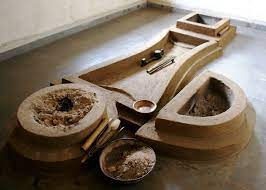
A fire altar must be built in order for the Agnicayana ritual to take place. The preparation can take up to a year before the ritual can fully take place, and the timing of the ritual must be precise as well. The ritual must take place in between the time of the new moon and the full moon in spring, and then preparations for the ritual space must be concise and made in sequences “The ritual site is a recon­struction of the cosmos itself, whose dimensions are mirrored in that of the human microcosm. One sees, in this ancient rite, early applications of the astronomical sciences in the necessary timings of each event, of mathematics, in its computations and structural geometries, and of the physical sciences in the casting of bricks, the making of fire, and the offering of oblations”. The fire altar can be made into different shapes, however the most common shape is that of the bird of prey (syena) that is dedicated to the god Agni. Agni has been described as eating the forest, a killer of demons and enemies, and although a god, he is never disengaged from his element, fire. Agni is closely interconnected with the home/family/clan/rituals, being represented by domestic fires that burn constantly; Agni guards the home and all within it. Through the Agnicayana ritual, one prays to Agni to help in the desired outcome of the ritual.


                                                                                                              - to be continued


Sunday, 7 May 2023

The Scientific Literature In Sanskrit-Part I


Characteristics of the Sanskrit Scientific Literature

The Sanskrit word for a scientific work is Saastram. In India science originated from theology and was at first cultivated in Vedic Schools.  The recitation of the Vedic hymns, the necessity to pronounce correctly words and expressions of the holy-scriptures and that for their wider circulation and the effort to understand them as far as possible led people early to realize the importance of grammatical studies and the beginning of a lexicography.  On account of the great mystic significance that was already attributed to the metres in the Braahmanams section of Vedic Hymns, it is no wonder that man passionately worked in the field of prosody.


The preparation of the Vedic calendar for the ceremonies necessitated study of heaveny bodies and of their movements, and this led to the beginning of the astronomical science.  The construction of sacrificial Altars required measurements and this led to geometry. 

                                                                                                - continued.

Saturday, 29 April 2023

ZEEVA-SASTRAZM (JEEVA-SASTRAM=AYURVEDA)


JeevaSastram means the treatise speaks about the life of the living creature.  Actually it is called Ayurveda, the name of the Indian medicine means that the Veda for (lengthening) the span of life which considered an Upanga (Subsidiary) to the Atharvaveda. The chief works on Indian ancient medicine have been described by J. Jolly, Medicine (Grudriss III, 10) that “in Medicine are included, through teaching on healings, what the Indians know about Botany, Minerelogy, and Chemistry (Alchemy)”. 

The science of medicine is also called VaidyaSastram.  According to tradition this JeevaSastram through the book SusrutaSamhita of the saint and physician Susruta originally consisted of

तस्यायुर्वेदस्याङ्गान्यष्टौ तद्यथा कायचिकित्सा, शालाक्यं, शल्यापहर्तृकं, विषगरवैरोधिकप्रशमनं, भूतविद्या, कौमारभृत्यकं रसायनं वाजीकरणमिति॥ (IV.34)

Ashtaanga=eight parts, in which Salya=major surgery, Saalaakya=minor surgery (E.N.T), Kaaaaya-Chikitsaa=treatment of disease of the body, BhoothaVidyaa=demonology-teaching on diseases caused by the demons (Psychology), KaumaraBruthyaa=healing of diseases of children(Paediatrics), VishaGaraVairodhikaPrasamanam or AgadaTantra=Toxicology, Rasaayana=Elixir (Treatment with Chemicals) and VaajeeKarana=Aphrodiasiaca.

Divine Origin

In the BrahmaVaivartaPuraana, the following phrases suggest that

ऋग्यजुस्सामाथर्वाख्यान् दृष्ट्वा वेदान् प्रजापतिः। विचिन्त्य तेषामर्थाञ्चैवायुर्वेदं चकार सः॥

कृत्वा तु पञ्चमं वेदं भास्कराय ददौ विभुः। स्वतन्त्रसंहितां तस्मात् भास्करश्च चकार सः॥

Brahma is reported to have transmitted Ayurveda, the fifth Veda, to Bhaskara, and then Bhaskara is mentioned to have compiled and independent Samhitaa.  Then one after the other it went to Asvini-Devatas, Indra and it was transmitted by these gods to the sages.

Blood Flow

According to BhelaSamhita, हृदो रसो निस्सरति तस्मादेति च सर्वशः। सिराभिर्हृदयं वैति तस्मात्तत्प्रभवाः सिराः॥” (20.3)

Rasa i.e., blood flows from the heart and then to all places.  Through the veins it again reaches the heart.

Botanical facts

SaanthiParva of MahaBharatam (184.13) says that

वल्ली वेष्टयते वृक्षं सर्वतश्चैव गच्छति। नाप्यदृष्टेश्च मार्गोऽस्ति तस्मात् पश्यन्ति पादपाः॥

The creeper moves about the tree trunks, covering it all around.  There is no path for thee one without sight.  Hence creeper can see. Moreover, trees can smell, have the sense of touch and even hear.

Many aspects of plant life are yet to be studied by modern science.  These facts are propounded by our fore-fathers ages before.

Some of the Important works

1. AthreyaSamhitha

2. HaritaSamhita

3. KaasyapaSamhita (VruddhaJeevakeeyam)

4. Agnivesa’s CarakaSamhita

5. BhelaSamhita

6. Works of Nagarjuna (Buddhist Philosopher)


(This Blog post is a part of Blogchatter's #BlogchatterA2Z)  

Friday, 28 April 2023

YOGA SASTRAM – SCIENCE ON MENTAL CARE


Yoga Sastram refers to a book of knowledge or authoritative teaching about the practice of yoga. While traditionally it refers to an in-depth classical text about yoga, in modern times the term has come to be associated with The Yoga Sutras, which were written by Patanjali, the founder of this Yoga philosophy.  This system is closely allied to the Sankhya.  It mostly accepts the epistemology and metaphysics of the Sankhya with its twenty-five principles, but admits also the existence of God.  The special interest of this Yoga system is in the practice of yoga as the means to the attainment of Vivekajnaana or discriminative knowledge.

The term, yoga-sastra, derives from the ancient Sanskrit language. Yoga means “to bind together” or “union,” while sastra means “instruction,” “treatise,” “sacred book,” “manual” or “scripture.”

According to Patanjali’s Yogasutram "चित्तवृत्तिनिरोधः योगः", Yoga consists in the cessation of all mental functions. These are (क्षिप्त = dissipated condition मूढ, = stupefied condition, विक्षिप्त = relatively pacified condition, एकाग्र = concentration and निरुद्ध = cessation of the function of contemplation - इति पञ्चचित्तभूमयः) the five levels of mental functions.

In the classical sense, examples of yoga-sastras include: "Hemachandra's Yogasastra" (a Svetambara Jain text), "Yoga-Sastra of Dattatreya" (one of the lords of yoga and considered a deity by some), and also the Hindu sacred book, the Bhagavad Gita.

But it is The Yoga Sutras that are most mentioned as Yoga-Sastra in the modern world. The 196 sutras are arranged into four chapters:

Samadhi-Pada, which describes yoga, nature and the path to samadhi (enlightenment).

Sadhana-Pada, which describes the practice of kriya (selfless action) yoga and Ashtanga (eightfold path) yoga.

Vibhuti-Pada, which describes the spiritual and mystical powers of yoga practice.

Kaivalya-Pada, which describes moksha (liberation) and the transcendental ego.

It is the eightfold path described in Sadhana Pada that is most familiar

to yogis in the western world. It consists of yamas (ethical rules),

niyamas (virtues), asanas (yoga postures), pranayama (breathing

exercises), pratyahara (sensory withdrawal), dharana (concentration),

dhyana (deep meditation) and samadhi (a state of intense concentration

and union).


Some of the Important works

1. YogaSutram of Patanjali

2. YogaSutraBhashyam of Vyasa Rishi.

3. TattvaVaisaradi of Vacaspati.

4. Vrutthi & YogaManiPrabha of Bhojaraja of Dhara.

5. YogaVarthikam of VijnaanaBhikshu


(This blogpost is a part of Blogchatter's#BlogchatterA2Z )

Thursday, 27 April 2023

XENA-SASTRAM (SENA-SASTRAM) THE SCIENCE ON ARMY


Indian culture has a distinct claim to a higher antiquity of the dynasty of kings. Their main duty was to protect the kingship by which they can even protect their subject.  To maintain their own sovereignty, they invaded the other country, captured the people, young ladies, forts etc., and looted the wealth.  Their warfare has developed on mechanical lines, giving less scope for the qualities of courage and individual leadership.

War is actually political institution and a necessary evil.  In ancient times, the laws of war were designed to bring out the best and not the worst of human traits.  Chivalry, individual heroism, qualities of mercy and notability of outlook even in the grimmest of struggles were not unknown to the soldiers of ancient India.  Thus among the laws of war, one can find that (1) a warrior in armour must not fight with one not so clad, (2) one should fight only one enemy and cease fighting if the opponent is disabled, (3) aged men, women and children, the retreating, or one who held a straw in his lips as a sign of unconditional surrender should not be killed.

Regular and proper organisation are the life and soul of an army.  Owing to peculiar geographical features, with vast plains interspersed with forests, the ancient Indian State had to make extensive use of mounted forces which comprised chariots, elephants, cavalry and infantries, collectively known as Caturangabala.

Divisions of the Army

The traditional fourfold force was thus described.

एतन्मौलादिषड्भेदं चतुरङ्गं बलं विदुः। षडङ्गं मन्त्रकोशाभ्यां पदात्यश्वरथद्विपैः॥

Army was regarded as a six-fold force, Mantra or the force of counsel and Kosa or the power of the treasury being added to the original four divisions.

Chariots were used in warfare from very remote times. There are different terms like Ratin, Suta and Saarathi used to denote the charioteer.  The Suta type charioteer was the one who become horse-trainer, physician. 

Chanakya mentioned them as Rathaadhyaksha = Superintendent of Chariots in his ArthaSastra.  It also mentions that "हस्त्यध्यक्षो हस्तिवनरक्षां दास्यकर्मक्षान्तानां हस्तिहस्तिनीकलभानां.........चिकित्सकानाकस्थायुकवर्गं चानुतिष्ठेत्॥" - a special officer of the state for the care of elephants, and lays down his duties and other particulars connected with that office.

Characteristics of A Good Army

The Sukraniti further describes the characteristics of agood army.  In short this political treatise envisages that गुल्मीभूतंसाधिकारि स्वस्वामिकमगुल्मकम्। दत्तास्त्रादि स्वामिना यत् स्वशस्त्रास्त्रमतोऽन्यथा॥  - two kinds of recruitment - Gulmibhuta answering to the standing army, and Agulmaka corresponding to the mercenary troops.

Units of the Army

The Indian army was divided in to Pathi, Senamukha, Gulma, Gana, Vahini, Pruthanaa, Chamoo, Aneekinee, and Akshauhinee.  These divisions roughly correspond to our modern battalions, regiments, companies etc.,  An akshauhinee consisted of 21,870 Chariots, 21,870 Elephants, 65,610 horses and 1,09,350 foot-soldiers, says Amarakosa thus

आधोरणा हस्तिपका हस्त्यारोहा निषादिनः नियन्ता प्राजिता यन्ता सूतः क्षत्ता च सारथिः

सव्येष्ठदक्षिणस्थौ च संज्ञा रथकुटुम्बिनः रथिनः स्यन्दनारोहा अश्वारोहास्तु सादिनः

भटा योधाश्च योद्धारः सेनारक्षास्तु सैनिकाःसेनायां समवेता ये सैन्यास्ते सैनिकाश्च ते

बलिनो ये सहस्रेण साहस्रास्ते सहस्रिणःपरिधिस्थः परिचरः सेनानीर्वाहिनीपतिः

Some of the Important works

ArthaSastram  Dhanurveda HariharaChaturanga Ramayanam MahaBharatam Manasollasa of Somesvara and Sukranitisaram


(This blogpost is a part of Blogchatter's #BlogchatterA2Z)

SEVEN FASCINATING TOPICS FROM SANSKRIT LITERATURE - 7. THE KATHASARITSAGARA

  THE KATHĀSARITSĀGARA: AN OCEAN OF INTERTWINED STORIES The Kathāsaritsāgara , meaning “The Ocean of the Streams of Stories,” is one of t...