Thursday, 29 February 2024

GOLDEN AGE OF SANSKRIT IN SOUTH INDIA


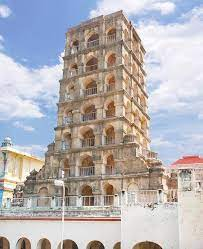
          After the Nayak’s period, in South India, then came the Maratha’s rule of Sahaji when Tanjore and its surroundings were buzzing with activity in many fields of learning, which activity was maintained by Sahaji’s successors as well.  For nearly a century and a quarter (1675-1800 A.D.) the politically dependent Tanjore held intellectual hegemony over South India.

          Sahaji was only twelve years old when he ascended the throne in 1684 A.D. and had a glorious rule of Tanjore for nearly twenty-eight years.  He was himself a scholar with a great achievement through the knowledge of six languages Sanskrit, Hindi, Marathi, Telugu, Tamil and Kannada.

          According to a grant-deed in Marathi, Sahaji gathered as many as forty-five scholars drawn from various parts of the country and settled them in Sahajirajapuram (the present Tiruvisanallur, Tanjore Dist.) Ramabhadra Dikshita was one among them.  Being a protégé of Sahaji, Ramabhadra Dikshita complimented by enlisting the most lovable qualities of his patron Sahaji that “the Bhoja of the eighteenth century”.  He was the author of many literary works among them, PatanjaliCaritam a Mahakavyam in 8 cantos, a minor-play named SrngaraTilakaBhana, a play titled JanakiParinayam in 7 Acts, and praise worthy technical works titled SabdaBhedaNirupanam, UnadiManiDipika and ShadDarsaniSiddhantaSangraham.  Ramabhadra Dikshita has carved for himself a place of honour among the later Sanskrit writers of South India through his multi-faceted genius.

          There is no branch of human knowledge that has not been dealt with in Sanskrit Literature.  The knowledge and culture of a highly civilised and intellectually advanced people inhabiting a vast country from 3000 B.C to about this 21st century A.D., has been recorded in this language which is rich and well-developed to express any idea in any branch of learning in clear terms.  We can feel proud of getting birth and living in this most virtuous our own country which was appreciated by the saints-  

“Uttharam yath samudrasya Himadhreschaiva dhakshinam

Varsham thath Bharatham naama Bharathi yathra Santhathih”

The country that lies north of the ocean and south of the snowy mountain is called Bharatham; there dwell the descendants of Bharatha.


By today Blogchatter's campaign #WriteAPageADay comes to an end. For this I have written 29 blogpost under the theme SANSKRIT IN INDIAN HISTORY, which you can read in my blog under the label #WriteAPageADay2024.

Wednesday, 28 February 2024

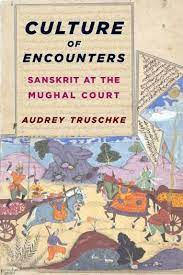
SANSKRIT IN THE REIGN OF MUGHALS


          In the wake of Mughal invasions, the political relations between the newcomers and the indigenous bounded to be influenced mutually.  The Hindu and the Muslim communities came to imbibe each other’s thoughts and customs.  It was out of the desire for mutual understanding that Hindu (Sanskrrit) religions literature was studied and translated or summarized in the Muslim courts like those of Zain-ul-Abidin in Kashmir and Husain Shah in Bengal. 

Muslim courts and Muslim preachers and saints were attracted to the study of Hindu philosophy like Yoga, Vedanta and the sciences of medicines and astrology.  The growth of Urdu, of the mingling “out of Persian, Arabic and Turkish words and ideas with languages and concepts of Sanskrit origin, is a proof of the linguistic synthesis of the Hindus and the Muslims”.

          The Mughal rulers of India were patrons of education.  Shah Jahan, though more interested in magnificent building, was highly educated in his early youth in Turki.  He founded one college at Delhi and repaired the college named Dar-Ul-Baqa (Abode of Eternity).  In Dara Shukoh the Mughal imperial family possessed one of the greatest scholars that India has ever produced.  Well versed in Arabic, Persian and Sanskrit, he was the author of some famous works, including Persian translations of the Upanishads, the Bhagavad Gita, and the Yoga Vasishtha Ramayana.

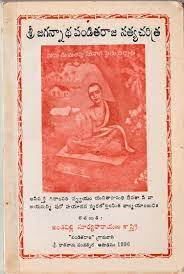
          Jagannatha Pandita (1590-1665 A.D), a protégé of Shah Jahan, is the author of five lyrics namely SudhaLahari, AmrtaLahari, LakshmiLahari, KarunaLahari and GangaLahari.  The SudhaLahari has thirty stanzas in praise of the sun, AmrtaLahari ten stanzas praising the river Yamuna, LakshmiLahari forty one stanzas in praise of Lakshmi, KarunaLahari which is also known as VishnuLahari sixty stanzas in praise of Vishnu, and GangaLahari which is also known as PiyushaLahari fifty two stanzas in praise of the river Ganga.


          Apart from these works, Jagannatha Pandita  authored a combined Gnomic and didactic poetry titled BhaminiVilasam contains four parts dealing with Anyokti, Srngara, Karunya, and Santi in 101, 100, 19, and 32 stanzas respectively in memory of his wife Bhamini. 

          Moreover, Jagannatha Pandita acquired high reputation through the RasaGangadharam which is standard work on Alankaras.  His sense of judgement becomes clear from his definition of poetry expressed in the line “Ramaneeyaarthaf prathipaadhakas sabdhaha means, a word that expresses a beautiful meaning”.

Tuesday, 27 February 2024

SANSKRIT IN THE REIGN OF NAYAK KINGS


          The Nayak kings of Vijayanagar, captured South India by defeating Pandyas and Cholas, ruled by possessing Tanjore as their capital, from 1535 to 1673 A.D., were zealous custodians of Sanskrit, Telugu, Tamil and Hindu art and culture.  For nearly three centuries, in spite of occasional disturbances to the peace of country, these ruler provided a congenial climate for more than 1250 scholars to pour forth their literary output.

          The great Appayya Dikshita, author of more than 100 works flourished in the 16th Century A.D.  Among the Nayak Kings, Raghunatha Nayak, a scholarly ruler of 1614 to 1633 A.D., who wrote many works on music and literature, his learned Queen Ramabhadramba, the authoress of Raghunathabhyudayam, Madhuravani, a court-poetess who rendered Andhra Ramayanam in Sanskrit verse, Govinda Dikshita the able minister and the author of SahithyaSudha and his son VenkataMakhin the musicologist, were notable literary personalities who formed a good set during the early part of the 16th A.D.

          RatnaKheta Dikshita the author of an allegorical play titled Bhavana-Purushottamam and more than 75 works, and his son RajaChoodamani Dikshita who was the author of more than 25 works on different genre in Sanskrit, among them Mahakavyas like RukminiKalyanam, Raghava-Yadava-Pandaviyam, KavyaDarpanam, a play AnandaRaghavam were the prominent literary works.

          After their period, in the early 17th A.D., Tirumala Nayaka became the successor of Nayak kings who ruled the South India through the capital city Madurai.  He has patronised many poets among them Mahakavi Nilakantha Dikshita was a praise worthy.  He was reputed as author of 17 works, notable among them are two major poems Siva-Lilarnavam and Gangavataranam, A campu titled Nilakantha-Vijaya-Campu, a play Nala-Caritam, devotional lyrics Aananda-Sagara-Stavam and Santi-Vilasam and Satiric poems titled Kali-Vidambanam and Sabha-Ranjana-Satakam. 

Monday, 26 February 2024

GOLDEN AGE OF SANSKRIT IN DHARA


          Bhoja was a king who became renowned as Sanskrit scholar.  It is believed that he lived from 1018 to 1054 A.D.  His capital city was Dhara.  Bhoja is credited with the authorship of many scholarly books in the field of different branches of Sanskrit.

          Among the works of Bhoja, SarasvatiKanthabharanam is a compendious volume in five chapters dealing with the merits and defects of poetry, figures of speech etc.  This work reveals the scholarship of Bhoja.  SrngaraPrakasah is work on poetics established Srngara=love as the best of the sentiments.  CampuRamayanam is a Campu contains prose and poetry.  The king Bhoja narrated the story of Ramayanam upto SundaraKandam, by following the original of Valmiki very closely.  Later its YuddhaKandam was completed by the great poet Sri Lakshmana Suri in the 19th A.D.

          NamaTalika a lexicographical treatise, Sabdanusasanam on Grammar, SamaranganaSutraDharam on Architecture, Aurveda-Sarvasvam on medicine, RajaMrgankam on Astrology etc were the other famous works of the scholarly king Bhoja.

          After his period, the king those who were followed the same style of this great king Bhoja, in composing Sanskrit works, ruling the kingdom, protecting the people, KrishnadevaRaya was called as AndhraBhoja.  Later, Maratha King by name Sahaji I of Tanjore was called BhosalanvayaBhoja in the 18th century A.D. 

Sunday, 25 February 2024

SANSKRIT IN THE VIJAYANAGAR EMPIRE Part III


          It is to be noted that in the 14th A.D., a poet named Lolambaraja was patronized by Haaihara I, composed a court epic titled HariVilasa in 5 cantos which describes the story of the Lord Krishna.

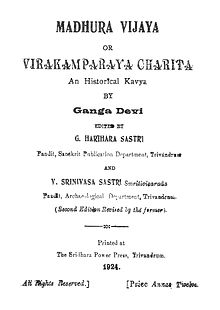
After the period Harihara I and Bukka I, the king Kampana, the second son of Bukka I was the Emperor of Vijayanagar in 1343 to 1379 A.D.  His wife the Queen GangaDevi was credited with the authorship of a poem MathuraVijayam also called ViraKampa-RayaCaritam with 7 cantos.  Kampana’s expedition to the South India and his slaying the ruler of Madurai are vividly described in this work.

        Later, in the beginning of the 16th Century A.D., the poetess named Tirumalamba, the wife and 

Queen of AcyutaRaya of Vijayanagar, composed a Campu-Kavya titled Varadambika      

Parinaya   Campu.  In this, she described her husband’s marriage with a princess Varadambika.  

This campu is written in fine and attractive style and rarely exhibits the skill of the authoress in the 

use of figurative device called Bhangaslesha.

Saturday, 24 February 2024

SANSKRIT IN THE VIJAYANAGAR EMPIRE - Part II


          The reign of Krishnadeva Raya not only marked the climax in the territorial expansion of the Vijanagar Empire, but was also remarkable for the encouragement and development of art and letters.  He wrote his magnum opus AmuktaMalyada, in Telugu JambhavatiParinayam and other four works in Sanskrit.  In his court flourished the “Ashta-Dig-gajas”, or the eight elephants (famous poets) who supported the world of Telugu literature. 

Works on music, dancing, drama, grammar, logic, philosophy etc., received encouragement from the emperor and his ministers.  He was the embodiment of catholicity because he was the only king who allowed such freedom that every man may come and go and live according to his own creed without suffering any annoyance, and without enquiry, whether he may be a Vaishnavite, Saivite, Buddhist, Jain, Muslim, Christian, Jew or Moor.

Ramadeva Raya, son-in-law of Krishnadeva Raya who has written unknown treatise on music and the poet Lakshminarayana wrote Sangita-suryodayam under the auspices of Krishnadeva Raya (1509-1530 A.D.)

After the poet Rajanatha II who had the title Dindima-Kavi-Sarvabhauma under the Vijayanagar kings, celebrated, about 1430 A.D., wrote Saluvabhyudayam in 13 cantos, the achievements of Saluva Narasimha who enthroned as the Emperor of Vijayanagar, his grandson Rajanatha III described about 1540 A.D., the exploits of King Acyuta Raya, brother of Krishnadeva Raya of Vijayanagar (1530-1544 A.D.), who became a king of Vijayanagar after the death of Krishnadeva Raya, in the Acyutarayabhyudayam containing 20 cantos. 

Friday, 23 February 2024

SANSKRIT IN THE VIJAYANAGAR EMPIRE - PART I


The Vijayanagar Empire has to its credit brilliant cultural and artistic achievements.  The Emperors were patrons of all languages - Sanskrit, Telugu, Tamil and Kannada, and under their fostering care some of the finest pieces of literature were produced.  Sayana, the famous commentator of the Vedas, and his brother Madhava Vidyaranya flourished during the early days of Vijayanagar rule, who composed Pancadasi later.

          The early history of Vijayanagar is still shrouded in obscurity.  At first, five sons of Sangama of whom Harihara and Bukka were the most eminent laid the foundation of the city and the kingdom of Vijayanagar in the later 4th century to early 5th century A.D., with the able guidance of celebrated Bramhmin sage and scholar Madhava Vidyaranya and his brother Sayana who commented all the Vedic texts. 

          After over a long period, the great empire legally taken by Saluva chief Narasimha, whose ancestors were the faithful feudatories of Vijaya-nagara kings.  Thus the Sangama dynasty was overthrown by so called “First Upsurption” and later become Saluva Dynasty.

          Narasimha Saluva had the prudence to charge his trusted general, Narasa Nayaka who claimed descent from Tuluva dynasty.  Later, Vira Narasimha, son of Narasa Nayaka of Tuluva who died in 1505 A.D., deposed the last Saluva ruler and seized the throne for himself.  This “Second Upsurption” led to the direct rule of Tuluva dynasty over the Vijayanagar Empire.

            After Vira Narasimha, his younger brother Krishnadeva Raya the Great succeeded the throne of Vijayanagar.  He was the one of the most famous kings in the history of India.  A gallant and active warrior, he was always successful in the wars that he waged almost throughout his reign.  But he has also maintained friendly relationship with the other kings who were approached him in the same manner.

VĀMANA BHAṬṬA BĀṆA: LIFE AND SANSKRIT WORKS

  Vāmana Bha ṭṭ a Bā ṇ a ( वामनभट्टबाण) was a Sanskrit poet, dramatist, and prose writer associated with the later classical period of Sans...